宿の本棚
ピーターラビットのおはなし(ほか)
The Tale of Peter Rabbit and Other Tales
ビアトリクス・ポター
段落の「訳」で日本語が開きます。ゲームの中では、単語に触れると辞書が引けます。
The Tale of Peter Rabbit
Once upon a time there were four little Rabbits, and their names were Flopsy, Mopsy, Cottontail, and Peter.
むかしむかし、四匹の小さなウサギがいて、その名はフロプシー、モプシー、コットンテール、そしてピーターだった。
They lived with their Mother in a sandbank, underneath the root of a very big fir-tree.
彼らは母さんといっしょに、とても大きなモミの木の根元の下にある砂地の巣穴に住んでいた。
“Now my dears,” said old Mrs. Rabbit one morning, “you may go into the fields or down the lane, but don’t go into Mr. McGregor’s garden.”
「さあ、みんな」ある朝、年寄りのラビット夫人が言った。「野原へ行ってもよいし、小道を下って行ってもよいけれど、マグレガーさんの庭へは入ってはだめですよ。」
“Your Father had an accident there; he was put in a pie by Mrs. McGregor.”
「お父さんはそこで災難にあったのです。マグレガー夫人にパイにされてしまったのですよ。」
“Now run along, and don’t get into mischief. I am going out.”
「さあ、行っておいで。いたずらをしちゃだめですよ。母さんは出かけますからね。」
Then old Mrs. Rabbit took a basket and her umbrella, and went through the wood to the baker’s. She bought a loaf of brown bread and five currant buns.
それから年寄りのラビット夫人は、かごと傘を手に取り、森を抜けてパン屋へ行った。そして、茶色いパン一斤とカレントパン五つを買った。
Flopsy, Mopsy, and Cottontail, who were good little bunnies, went down the lane to gather blackberries;
フロプシー、モプシー、コットンテールは、おとなしいいい子の小さなウサギだったので、小道を下ってブラックベリーを摘みに行った。
But Peter, who was very naughty, ran straight away to Mr. McGregor’s garden.
だが、たいそうわるがきのピーターは、まっすぐマグレガーさんの庭へ走って行ってしまった。
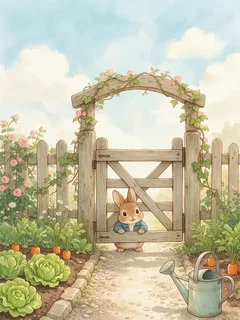
And squeezed under the gate!
そして門の下をくぐり抜けた!
First he ate some lettuces and some French beans; and then he ate some radishes;
まずレタスを少しとフレンチビーンズを少し食べ、それからラディッシュを食べた。
And then, feeling rather sick, he went to look for some parsley.
それから、少しむかむかしながら、パセリを探しに行った。
But round the end of a cucumber frame, whom should he meet but Mr. McGregor!
すると、きゅうりの支柱の端を回ったところで、よりによってマグレガーさんに出くわしたではないか!
Mr. McGregor was on his hands and knees planting out young cabbages, but he jumped up and ran after Peter, waving a rake and calling out, “Stop thief!”
マグレガーさんは若いキャベツを植えつけるために四つんばいになっていたが、すぐに跳び起きて熊手を振りかざしながらピーターを追いかけ、「どろぼう、止まれ!」と叫んだ。
Peter was most dreadfully frightened; he rushed all over the garden, for he had forgotten the way back to the gate.
ピーターはそれはもうひどく怖がった。門へ戻る道を忘れてしまっていたので、庭じゅうをむやみに駆け回った。
He lost one of his shoes among the cabbages, and the other shoe amongst the potatoes.
キャベツの間で片方の靴をなくし、もう片方の靴はジャガイモの間でなくした。
After losing them, he ran on four legs and went faster, so that I think he might have got away altogether if he had not unfortunately run into a gooseberry net, and got caught by the large buttons on his jacket. It was a blue jacket with brass buttons, quite new.
靴をなくしたあと、彼は四足で走ったので、ずっと速くなった。だから、もし運悪くグーズベリーの網に突っ込んで、上着の大きなボタンに引っかからなかったなら、すっかり逃げおおせていたかもしれないと思う。上着は青い上着で、真鍮のボタンがついた、まったく新しいものだった。
Peter gave himself up for lost, and shed big tears; but his sobs were overheard by some friendly sparrows, who flew to him in great excitement, and implored him to exert himself.
ピーターはもうだめだと思い、ぽろぽろと大粒の涙を流した。だがそのすすり泣きは、親切なスズメたちの耳に入り、スズメたちは大さわぎで彼のところへ飛んで来て、どうか力をふるいなさいと懇願した。
Mr. McGregor came up with a sieve, which he intended to pop upon the top of Peter; but Peter wriggled out just in time, leaving his jacket behind him.
マグレガーさんがざるを持ってやって来た。それをピーターの上にかぶせるつもりだったのだが、ピーターはちょうど間に合って身をくねらせ、上着を置き去りにして抜け出した。
And rushed into the tool-shed, and jumped into a can. It would have been a beautiful thing to hide in, if it had not had so much water in it.
そして道具小屋へ駆け込み、ブリキ缶の中へ飛び込んだ。水があんなに入っていなければ、隠れるにはすばらしい場所だったろうに。
Mr. McGregor was quite sure that Peter was somewhere in the tool-shed, perhaps hidden underneath a flowerpot. He began to turn them over carefully, looking under each.
マグレガーさんは、ピーターはきっと道具小屋のどこかにいる、たぶん植木鉢の下に隠れているのだろうと、すっかり確信していた。そこで彼は一つずつていねいにひっくり返し、下をのぞいていった。
Presently Peter sneezed—“Kertyschoo!” Mr. McGregor was after him in no time.
やがてピーターがくしゃみをした――「ケルティショー!」――マグレガーさんはたちまち彼を追いかけた。
And tried to put his foot upon Peter, who jumped out of a window, upsetting three plants. The window was too small for Mr. McGregor, and he was tired of running after Peter. He went back to his work.
そしてピーターを踏みつけようとしたが、ピーターは窓から飛び出し、そのはずみに三つの鉢植えをひっくり返した。窓はマグレガーさんには小さすぎたし、彼もピーターを追いかけるのに疲れていた。そこで彼は仕事に戻った。
Peter sat down to rest; he was out of breath and trembling with fright, and he had not the least idea which way to go. Also he was very damp with sitting in that can.
ピーターは腰をおろして休んだ。息が切れ、こわさで震えていて、どちらへ行けばいいのか少しも分からなかった。それに、あの缶の中に座っていたので、ひどくぬれていた。
After a time he began to wander about, going lippity—lippity—not very fast, and looking all round.
しばらくすると、彼はあちこちさまよいはじめ、リッピティ――リッピティ――と、あまり速くない足どりで歩きながら、あたりを見回した。
He found a door in a wall; but it was locked, and there was no room for a fat little rabbit to squeeze underneath.
壁にある扉を見つけたが、鍵がかかっていて、太った小さなウサギが下をくぐる余地はなかった。
An old mouse was running in and out over the stone doorstep, carrying peas and beans to her family in the wood. Peter asked her the way to the gate, but she had such a large pea in her mouth that she could not answer. She only shook her head at him. Peter began to cry.
年老いたネズミが、石の敷居の上を出たり入ったりしながら、森にいる家族のためにエンドウ豆や豆を運んでいた。ピーターは門への行き方を尋ねたが、ネズミは口に大きなエンドウ豆をくわえていたので答えられなかった。ただ彼に向かって首を振るだけだった。ピーターは泣きだした。
Then he tried to find his way straight across the garden, but he became more and more puzzled. Presently, he came to a pond where Mr. McGregor filled his water-cans. A white cat was staring at some goldfish, she sat very, very still, but now and then the tip of her tail twitched as if it were alive. Peter thought it best to go away without speaking to her; he had heard about cats from his cousin, little Benjamin Bunny.
それから彼は庭をまっすぐ横切って行こうとしたが、ますますわけが分からなくなった。まもなく、マグレガーさんがじょうろに水を入れるための池へ来た。白い猫が金魚をじっと見つめていた。猫は、ほんとうに、ほんとうに静かに座っていたが、時おり尾の先が、まるで生きているかのようにぴくりと動いた。ピーターは、口をきかずにそこを離れるのがよいと思った。いとこの小さなベンジャミン・バニーから、猫のことは聞いていたのだ。
He went back towards the tool-shed, but suddenly, quite close to him, he heard the noise of a hoe—scr‑r‑ritch, scratch, scratch, scritch. Peter scuttered underneath the bushes. But presently, as nothing happened, he came out, and climbed upon a wheelbarrow and peeped over. The first thing he saw was Mr. McGregor hoeing onions. His back was turned towards Peter, and beyond him was the gate!
彼は道具小屋のほうへ戻ったが、すると突然、すぐ近くで鍬の音が聞こえた――スクルリッチ、ザッ、ザッ、スクッチ。ピーターは茂みの下へすばやく潜り込んだ。だが、しばらくしても何も起こらなかったので、彼は出てきて、一輪車によじのぼり、上からそっとのぞいた。最初に見えたのは、マグレガーさんが玉ねぎを鍬で耕している姿だった。彼の背中はピーターのほうを向いており、その向こうには門があった!
Peter got down very quietly off the wheelbarrow; and started running as fast as he could go, along a straight walk behind some black-currant bushes.
ピーターは一輪車からとても静かに降りると、黒スグリの茂みの後ろにあるまっすぐな道を、できるだけ速く走りだした。
Mr. McGregor caught sight of him at the corner, but Peter did not care. He slipped underneath the gate, and was safe at last in the wood outside the garden.
マグレガーさんは角で彼の姿を見つけたが、ピーターは気にしなかった。彼は門の下をすり抜け、ついに庭の外の森で安全になった。
Mr. McGregor hung up the little jacket and the shoes for a scarecrow to frighten the blackbirds.
マグレガーさんは、その小さな上着と靴を、クロウタドリを脅かす案山子に掛けた。
Peter never stopped running or looked behind him till he got home to the big fir-tree.
ピーターは、家で大きなモミの木に着くまで、走るのをやめず、 पीछेも振り返らなかった。
He was so tired that he flopped down upon the nice soft sand on the floor of the rabbit-hole and shut his eyes. His mother was busy cooking; she wondered what he had done with his clothes. It was the second little jacket and pair of shoes that Peter had lost in a fortnight!
あまりにも疲れていたので、うさぎ穴の床にある心地よく柔らかな砂の上にばたりと倒れ、目を閉じた。母さんは料理に忙しかったので、彼が服をどうしたのか不思議に思った。ピーターが二週間のあいだになくしたのは、これで二着目の小さな上着と一足目の靴だったのだ!
I am sorry to say that Peter was not very well during the evening.
残念ながら、ピーターはその夕方はあまり具合がよくなかった。
His mother put him to bed, and made some camomile tea; and she gave a dose of it to Peter!
母さんは彼を寝かせ、カモミール茶をつくってやり、その一服をピーターに飲ませた!
“One tablespoonful to be taken at bedtime.”
「寝る前に大さじ一杯。」
But Flopsy, Mopsy, and Cottontail had bread and milk and blackberries for supper.
だが、フロプシー、モプシー、コットンテールの夕食は、パンとミルクとブラックベリーだった。
The Tale of Benjamin Bunny
One morning a little rabbit sat on a bank.
ある朝、小さなウサギが土手にすわっていた。
He pricked his ears and listened to the trit-trot, trit-trot of a pony.
彼は耳をぴんと立て、ポニーのトリトット、トリトットという足音に耳をすませた。
A gig was coming along the road; it was driven by Mr. McGregor, and beside him sat Mrs. McGregor in her best bonnet.
小型馬車が道をやって来た。御者はマグレガーさんで、そのそばには最高のボンネットをかぶったマグレガーさん夫人がすわっていた。
As soon as they had passed, little Benjamin Bunny slid down into the road, and set off—with a hop, skip, and a jump—to call upon his relations, who lived in the wood at the back of Mr. McGregor’s garden.
その一行が通りすぎるやいなや、小さなベンジャミン・バニーは道路へすべりおり、そして——ぴょん、ひょい、ぴょんと——身内たちを訪ねに出かけた。彼らはマグレガーさんの庭の裏手にある森に住んでいた。
That wood was full of rabbit holes; and in the neatest, sandiest hole of all lived Benjamin’s aunt and his cousins—Flopsy, Mopsy, Cottontail, and Peter.
その森にはウサギ穴がたくさんあった。そして、いちばんきちんとしていて、いちばん砂っぽい穴には、ベンジャミンのおばといとこたち――フロプシー、モプシー、コットンテイル、それにピーター――が住んでいた。
Old Mrs. Rabbit was a widow; she earned her living by knitting rabbit-wool mittens and muffatees (I once bought a pair at a bazaar). She also sold herbs, and rosemary tea, and rabbit-tobacco (which is what we call lavender).
年とったラビット夫人は未亡人だった。彼女はウサギの毛糸で編んだ手袋やマフティーを作って生計を立てていた(私は昔、バザーで一組買ったことがある)。それに、薬草やローズマリー・ティー、それからウサギたばこも売っていた(これは私たちがラベンダーと呼ぶものである)。
Little Benjamin did not very much want to see his Aunt.
小さなベンジャミンは、おばに会いたい気があまりしなかった。
He came round the back of the fir-tree, and nearly tumbled upon the top of his Cousin Peter.
彼はモミの木の後ろを回りこみ、危うくいとこのピーターの上にころがり落ちるところだった。
Peter was sitting by himself. He looked poorly, and was dressed in a red cotton pocket-handkerchief.
ピーターはひとりで座っていた。顔色が悪く、赤い木綿のハンカチのようなものを着ていた。
“Peter,” said little Benjamin, in a whisper, “who has got your clothes?”
「ピーター」と、小さなベンジャミンはささやいた、「きみの服は、だれが持っているの?」
Peter replied, “The scarecrow in Mr. McGregor’s garden,” and described how he had been chased about the garden, and had dropped his shoes and coat.
ピーターは、「マグレガーさんの庭のかかしだよ」と答え、庭を追いかけ回されたことや、靴と上着を落としてしまったことを話した。
Little Benjamin sat down beside his cousin and assured him that Mr. McGregor had gone out in a gig, and Mrs. McGregor also; and certainly for the day, because she was wearing her best bonnet.
小さなベンジャミンは、いとこのそばに腰をおろし、マグレガーさんは小型馬車で出かけてしまったし、マグレガーさん夫人もそうだ、と保証した。しかも今日はもう確かに戻らない。なぜなら、彼女は最高のボンネットをかぶっていたからだ。
Peter said he hoped that it would rain.
ピーターは、雨が降ればいいのにと言った。
At this point old Mrs. Rabbit’s voice was heard inside the rabbit hole, calling: “Cottontail! Cottontail! fetch some more camomile!”
そのとき、ウサギ穴の中から年とったラビット夫人の声が聞こえた。「コットンテイル! コットンテイル! カミツレをもっと取っておいで!」
Peter said he thought he might feel better if he went for a walk.
ピーターは、散歩に出れば少し気分がよくなるかもしれないと言った。
They went away hand in hand, and got upon the flat top of the wall at the bottom of the wood. From here they looked down into Mr. McGregor’s garden. Peter’s coat and shoes were plainly to be seen upon the scarecrow, topped with an old tam-o’-shanter of Mr. McGregor’s.
二匹は手をつないで立ち去り、森の下のほうにある壁の平らなてっぺんへ登った。そこから、マグレガーさんの庭を見おろした。ピーターの上着と靴が、マグレガーさんの古いタータン帽をのせたかかしの上に、はっきり見えた。
Little Benjamin said: “It spoils people’s clothes to squeeze under a gate; the proper way to get in is to climb down a pear-tree.”
小さなベンジャミンは言った。「門の下をくぐろうとすると服がだめになる。きちんと入るには、ナシの木をよじ登って降りるのが正しいやり方さ」
Peter fell down head first; but it was of no consequence, as the bed below was newly raked and quite soft.
ピーターは頭からまっさかさまに落ちた。だが、下の花壇はちょうど耕したばかりで、やわらかかったので、何の差し障りもなかった。
It had been sown with lettuces.
そこにはレタスが植えてあった。
They left a great many odd little footmarks all over the bed, especially little Benjamin, who was wearing clogs.
二匹は花壇じゅうに、妙ちきりんな小さな足跡をたくさん残した。とりわけ、小さなベンジャミンは木靴をはいていたのでそうだった。
Little Benjamin said that the first thing to be done was to get back Peter’s clothes, in order that they might be able to use the pocket-handkerchief.
小さなベンジャミンは、まず先に、ピーターの服を取り戻さなければならない、そのためにハンカチを使えるようにしようと言った。
They took them off the scarecrow. There had been rain during the night; there was water in the shoes, and the coat was somewhat shrunk.
二匹はそれをかかしから脱がせた。夜のあいだに雨が降っていて、靴の中には水がたまっており、上着はやや縮んでいた。
Benjamin tried on the tam-o’-shanter, but it was too big for him.
ベンジャミンはタータン帽をかぶってみたが、彼には大きすぎた。
Then he suggested that they should fill the pocket-handkerchief with onions, as a little present for his Aunt.
それから彼は、いとこのおばへのちょっとした贈り物として、ハンカチにタマネギを詰めようと提案した。
Peter did not seem to be enjoying himself; he kept hearing noises.
ピーターはあまり楽しんでいないようだった。しきりに物音が聞こえるのだ。
Benjamin, on the contrary, was perfectly at home, and ate a lettuce leaf. He said that he was in the habit of coming to the garden with his father to get lettuces for their Sunday dinner.
それに反してベンジャミンはすっかり落ち着いており、レタスの葉を一枚食べた。彼は、毎週日曜の夕食に食べるレタスを取りに、父さんといっしょにこの庭へ来るのはいつものことだと言った。
(The name of little Benjamin’s papa was old Mr. Benjamin Bunny.)
(小さなベンジャミンのパパの名前は、年とったベンジャミン・バニーといった。)
The lettuces certainly were very fine.
レタスは、まことに立派なものだった。
Peter did not eat anything; he said he should like to go home. Presently he dropped half the onions.
ピーターは何も食べなかった。家へ帰りたいと言った。やがて彼はタマネギを半分落とした。
Little Benjamin said that it was not possible to get back up the pear-tree with a load of vegetables. He led the way boldly towards the other end of the garden. They went along a little walk on planks, under a sunny, red brick wall.
小さなベンジャミンは、野菜を抱えたままナシの木をよじ登って戻ることはできないと言った。彼は大胆にも、庭の向こうのはしへ向かって先頭に立った。二匹は、日当たりのよい赤煉瓦の壁の下を、板敷きの小道に沿って進んだ。
The mice sat on their doorsteps cracking cherrystones; they winked at Peter Rabbit and little Benjamin Bunny.
ネズミたちは戸口の段にすわってサクランボの種を割っていた。彼らはピーター・ラビットと小さなベンジャミン・バニーに、目くばせした。
Presently Peter let the pocket-handkerchief go again.
まもなくピーターは、またしてもハンカチを落としてしまった。
They got amongst flowerpots, and frames, and tubs. Peter heard noises worse than ever; his eyes were as big as lolly-pops!
二匹は植木鉢や苗枠やたらいのあいだへ入りこんだ。ピーターは今までよりひどい物音を耳にした。目はポップキャンディーのようにまん丸になった!
He was a step or two in front of his cousin when he suddenly stopped.
彼はいとこの少し前を行っていたが、突然立ち止まった。
This is what those little rabbits saw round that corner!
あの角を曲がったところで、この小ウサギたちが見たものは、これだった!
Little Benjamin took one look, and then, in half a minute less than no time, he hid himself and Peter and the onions underneath a large basket.…
小さなベンジャミンはひと目見て、そして、またたくまもない半分以下の一瞬で、自分とピーターとタマネギを大きなかごの下に隠した。……
The cat got up and stretched herself, and came and sniffed at the basket.
猫は立ち上がってのびをし、それからかごのところへやって来て、くんくんと匂いをかいだ。
Perhaps she liked the smell of onions!
ひょっとすると、タマネギの匂いが好きだったのかもしれない。
Anyway, she sat down upon the top of the basket.
とにかく、彼女はかごの上にすわりこんだ。
She sat there for five hours.
彼女はそこで五時間もすわっていた。
I cannot draw you a picture of Peter and Benjamin underneath the basket, because it was quite dark, and because the smell of onions was fearful; it made Peter Rabbit and little Benjamin cry.
かごの下にいるピーターとベンジャミンの絵を描いてお見せすることはできない。そこはまったく暗かったし、それにタマネギの臭いが恐ろしく、ピーター・ラビットと小さなベンジャミンを泣かせたからである。
The sun got round behind the wood, and it was quite late in the afternoon; but still the cat sat upon the basket.
太陽は森の向こうへ回ってしまい、午後もかなり遅くなった。だが、それでもなお猫はかごの上にすわっていた。
At length there was a pitter-patter, pitter-patter, and some bits of mortar fell from the wall above.
やがて、ぱたぱた、ぱたぱたという音がして、上の壁からモルタルのかけらが少し落ちてきた。
The cat looked up and saw old Mr. Benjamin Bunny prancing along the top of the wall of the upper terrace.
猫は見上げて、年とったベンジャミン・バニーが上段テラスの壁のてっぺんを、跳ねながら進んでいくのを見た。
He was smoking a pipe of rabbit-tobacco, and had a little switch in his hand.
彼はウサギたばこでパイプをくゆらせ、手には小さな鞭枝を持っていた。
He was looking for his son.
息子を探していたのだ。
Old Mr. Bunny had no opinion whatever of cats.
年とったバニー氏は、猫などまったく問題にしていなかった。
He took a tremendous jump off the top of the wall on to the top of the cat, and cuffed it off the basket, and kicked it into the greenhouse, scratching off a handful of fur.
彼は壁の上から猫の上へものすごい跳躍をし、猫をかごから叩き落として温室へ蹴り込み、毛をひとつかみ引っぺがした。
The cat was too much surprised to scratch back.
猫はあまりに驚いて、やり返してひっかくこともできなかった。
When old Mr. Bunny had driven the cat into the greenhouse, he locked the door.
年とったバニー氏が猫を温室へ追いこんだあと、彼は戸に鍵をかけた。
Then he came back to the basket and took out his son Benjamin by the ears, and whipped him with the little switch.
それからかごのところへ戻り、息子のベンジャミンを耳のところでつかみ出し、小さな鞭枝でぴしゃりと打った。
Then he took out his nephew Peter.
それから甥のピーターを取り出した。
Then he took out the handkerchief of onions, and marched out of the garden.
それからタマネギの入ったハンカチを取り出し、庭を出ていった。
When Mr. McGregor returned about half an hour later he observed several things which perplexed him.
マグレガーさんが約三十分後に戻ってくると、彼を困惑させることが幾つも目に入った。
It looked as though some person had been walking all over the garden in a pair of clogs—only the footmarks were too ridiculously little!
まるでだれかが木靴をはいて庭じゅうを歩き回ったようだった――ただし、その足跡はばかばかしいほど小さすぎた!
Also he could not understand how the cat could have managed to shut herself up inside the greenhouse, locking the door upon the outside.
それに、猫がどうやって温室の内側に閉じこもり、戸を外側からかけたままにしておけたのか、彼にはさっぱりわからなかった。
When Peter got home his mother forgave him, because she was so glad to see that he had found his shoes and coat. Cottontail and Peter folded up the pocket-handkerchief, and old Mrs. Rabbit strung up the onions and hung them from the kitchen ceiling, with the bunches of herbs and the rabbit-tobacco.
ピーターが家に帰ると、母親は彼を許した。靴と上着を見つけたのがわかって、たいそううれしかったからである。コットンテールとピーターはポケットチーフをたたみ、年老いたラビット夫人は玉ねぎをひもでつづって、ハーブの束やラビットタバコと一緒に台所の天井からつるした。
The Tale of Squirrel Nutkin
This is a Tale about a tail—a tail that belonged to a little red squirrel, and his name was Nutkin.
これは尾についてのお話――小さな赤いリスの尾のお話で、その名はナットキンといった。
He had a brother called Twinkleberry, and a great many cousins: they lived in a wood at the edge of a lake.
彼にはトゥインクルベリーという名の兄弟がいて、ほかにもたいそうたくさんのいとこたちがいた。彼らは湖の端にある森に住んでいた。
In the middle of the lake there is an island covered with trees and nut bushes; and amongst those trees stands a hollow oak-tree, which is the house of an owl who is called Old Brown.
湖のまんなかには、木々と木の実の茂みにおおわれた島があり、その木々のあいだから、うろのある樫の木がそびえていた。それはオールド・ブラウンと呼ばれるふくろうの家であった。
One autumn when the nuts were ripe, and the leaves on the hazel bushes were golden and green—Nutkin and Twinkleberry and all the other little squirrels came out of the wood, and down to the edge of the lake.
ある秋、木の実が熟し、ハシバミの茂みの葉が黄金色と緑に染まったころ――ナットキンとトゥインクルベリー、それにほかの小さなリスたちみんなが森から出て、湖の岸辺へやって来た。
They made little rafts out of twigs, and they paddled away over the water to Owl Island to gather nuts.
彼らは小枝で小さないかだを作り、水の上をオウル島まで漕いで行って、木の実を集めた。
Each squirrel had a little sack and a large oar, and spread out his tail for a sail.
それぞれのリスは小さな袋と大きな櫂を持ち、尾を広げて帆にした。
They also took with them an offering of three fat mice as a present for Old Brown, and put them down upon his doorstep.
また彼らは、オールド・ブラウンへの贈り物として、太った三匹のねずみを献上に持って行き、彼の玄関先に置いた。
Then Twinkleberry and the other little squirrels each made a low bow, and said politely—
するとトゥインクルベリーとほかの小さなリスたちは、それぞれ低くお辞儀をして、丁寧に言った――
“Old Mr. Brown, will you favour us with permission to gather nuts upon your island?”
「老ブラウンさん、あなたの島で木の実を集める許しをいただけますか」
But Nutkin was excessively impertinent in his manners. He bobbed up and down like a little red cherry, singing—
だがナットキンの物腰は、ひどく生意気であった。彼は小さな赤いさくらんぼのようにぴょこぴょこ跳ねながら、歌った――
“Riddle me, riddle me, rot-tot-tote! A little wee man, in a red red coat! A staff in his hand, and a stone in his throat; If you’ll tell me this riddle, I’ll give you a groat.”
「なぞなぞ、なぞなぞ、ろととと! 赤い赤い上着を着た、小さなちっちゃな男! 手には杖、のどには石; このなぞを当てたなら、ぼくは一グロートあげよう」
Now this riddle is as old as the hills; Mr. Brown paid no attention whatever to Nutkin.
このなぞなぞは、山ほど昔からあるものだった。ブラウン氏はナットキンに、まるで注意を払わなかった。
He shut his eyes obstinately and went to sleep.
彼は意地になって目を閉じ、そのまま眠ってしまった。
The squirrels filled their little sacks with nuts, and sailed away home in the evening.
リスたちは小さな袋いっぱいに木の実を詰め、夕方になると舟で家へ帰っていった。
But next morning they all came back again to Owl Island; and Twinkleberry and the others brought a fine fat mole, and laid it on the stone in front of Old Brown’s doorway, and said—
だが翌朝、彼らはまたみなオウル島へ戻って来た。トゥインクルベリーとほかの者たちは、立派な太ったもぐらを持って来て、オールド・ブラウンの戸口の前の石の上に置き、言った――
“Mr. Brown, will you favour us with your gracious permission to gather some more nuts?”
「ブラウンさん、もっと木の実を集めることを、どうかご厚意でお許しくださいませんか」
But Nutkin, who had no respect, began to dance up and down, tickling old Mr. Brown with a nettle and singing—
だが、礼儀をわきまえぬナットキンは、いきなり踊り出し、イラクサで老ブラウンをくすぐりながら歌った――
“Old Mr. B! Riddle-me-ree! Hitty Pitty within the wall, Hitty Pitty without the wall; If you touch Hitty Pitty, Hitty Pitty will bite you!”
「老ブラウンさん! なぞなぞ、りー! ヒッティ・ピッティは壁の内、 ヒッティ・ピッティは壁の外; ヒッティ・ピッティにさわれば、 ヒッティ・ピッティはおまえにかみつく!」
Mr. Brown woke up suddenly and carried the mole into his house.
ブラウン氏はぱっと目を覚まし、もぐらを家の中へ運び込んだ。
He shut the door in Nutkin’s face. Presently a little thread of blue smoke from a wood fire came up from the top of the tree, and Nutkin peeped through the keyhole and sang—
そしてナットキンの顔めがけて戸をぴしゃりと閉めた。やがて木の上のほうから、薪の火の青い煙が細い筋になって立ちのぼり、ナットキンは鍵穴からのぞき込み、歌った――
“A house full, a hole full! And you cannot gather a bowl-full!”
「家の中いっぱい、穴いっぱい! それでもおまえは、ひと椀分も集められない!」
The squirrels searched for nuts all over the island and filled their little sacks.
リスたちは島じゅうを探し回って木の実を集め、小さな袋をいっぱいにした。
But Nutkin gathered oak-apples—yellow and scarlet—and sat upon a beech-stump playing marbles, and watching the door of old Mr. Brown.
だがナットキンは、黄と緋色のオークの実を集め、ブナの切り株の上にすわっておはじきをしながら、老ブラウンの戸口を見張っていた。
On the third day the squirrels got up very early and went fishing; they caught seven fat minnows as a present for Old Brown.
三日目には、リスたちはたいそう早起きして釣りに出かけ、オールド・ブラウンへの贈り物として、太った小魚を七匹捕まえた。
They paddled over the lake and landed under a crooked chestnut tree on Owl Island.
彼らは湖を渡って漕ぎ、オウル島の曲がった栗の木の下に上陸した。
Twinkleberry and six other little squirrels each carried a fat minnow; but Nutkin, who had no nice manners, brought no present at all. He ran in front, singing—
トゥインクルベリーとほかの六匹の小リスは、それぞれ太った小魚を一匹ずつ運んでいた。だが、行儀のよくないナットキンは、贈り物をひとつも持って来なかった。彼は先頭を走りながら、歌った――
“The man in the wilderness said to me, “How many strawberries grow in the sea?” I answered him as I thought good— “As many red herrings as grow in the wood.”
「荒野の男がぼくに言った、 『海にいちごは何本生える?』 ぼくは思うままに答えたよ―― 『森に生える赤ニシンと同じだけさ』」
But old Mr. Brown took no interest in riddles—not even when the answer was provided for him.
だが老ブラウンは、なぞなぞには少しも興味を示さなかった――答えまで教えてもらったときでさえ。
On the fourth day the squirrels brought a present of six fat beetles, which were as good as plums in plum-pudding for Old Brown. Each beetle was wrapped up carefully in a dock-leaf, fastened with a pine-needle pin.
四日目には、リスたちは六匹の太った甲虫を贈り物として持って来た。オールド・ブラウンにとっては、それはプラム・プディングの中のプラムにも負けぬほど結構なごちそうであった。甲虫は一匹ずつ、タデの葉にくるまれ、松葉のピンで留められていた。
But Nutkin sang as rudely as ever—
だがナットキンは、相変わらず無礼に歌った――
“Old Mr. B! riddle-me-ree Flour of England, fruit of Spain, Met together in a shower of rain; Put in a bag tied round with a string, If you’ll tell me this riddle, I’ll give you a ring!”
「老ブラウンさん! なぞなぞ、りー イングランドの小麦粉、スペインの果実、 雨のにわか降りの中で出会った; ひもで結んだ袋に入れておくよ、 このなぞを当てたなら、ぼくは指輪をあげよう!」
Which was ridiculous of Nutkin, because he had not got any ring to give to Old Brown.
これはナットキンにはおかしな話だった。オールド・ブラウンにやる指輪など、彼は持っていなかったのだから。
The other squirrels hunted up and down the nut bushes; but Nutkin gathered robin’s pincushions off a briar bush, and stuck them full of pine-needle pins.
ほかのリスたちは木の実の茂みをあちこち探し回ったが、ナットキンはイバラの茂みからコマツグミの針山を集めて来て、それを松葉のピンでいっぱいにした。
On the fifth day the squirrels brought a present of wild honey; it was so sweet and sticky that they licked their fingers as they put it down upon the stone. They had stolen it out of a bumble bees’ nest on the tippitty top of the hill.
五日目には、リスたちは野生の蜂蜜を贈り物に持って来た。それはあまりに甘くてべたべたしていたので、石の上に置くとき、彼らは指をなめずにいられなかった。山のてっぺんのてっぺっぴてっぺんにあるマルハナバチの巣から盗んできたのである。
But Nutkin skipped up and down, singing—
だがナットキンは、ぴょんぴょん跳ねながら歌った――
“Hum-a-bum! buzz! buzz! Hum-a-bum buzz! As I went over Tipple-tine I met a flock of bonny swine; Some yellow-nacked, some yellow backed! They were the very bonniest swine That e’er went over Tipple-tine.”
「ハム・ア・バム! ブンブン! ハム・ア・バム・ブン! ぼくがティプル・タインを越えて行くと かわいい豚の群れに出会った; 黄首のもいた、黄背のもいた! 彼らはたいそうかわいい豚たちで だれよりかわいかった、ティプル・タインを越えて行った豚たちの中で」
Old Mr. Brown turned up his eyes in disgust at the impertinence of Nutkin.
オールド・ブラウンは、ナットキンの無礼さにうんざりして、目をぐるりと上に向けた。
But he ate up the honey!
だが彼は蜂蜜を平らげてしまった!
The squirrels filled their little sacks with nuts.
リスたちは小さな袋いっぱいに木の実を詰めた。
But Nutkin sat upon a big flat rock, and played ninepins with a crab apple and green fir-cones.
だがナットキンは、大きな平たい岩の上にすわり、ナシの小さな木の実と青いモミの球果で九柱戯をしていた。
On the sixth day, which was Saturday, the squirrels came again for the last time; they brought a new-laid egg in a little rush basket as a last parting present for Old Brown.
六日目、つまり土曜日に、リスたちは最後にもう一度やって来た。オールド・ブラウンへの最後の別れの贈り物として、彼らは新しく産みたての卵を、小さなイグサの籠に入れて持って来た。
But Nutkin ran in front laughing, and shouting—
だがナットキンは笑いながら先頭を走り、叫んだ――
“Humpty Dumpty lies in the beck, With a white counterpane round his neck, Forty doctors and forty wrights, Cannot put Humpty Dumpty to rights!”
「ハンプティ・ダンプティは小川に落ち、 首のまわりを白い掛け布で巻かれた、 四十人の医者と四十人の職人でも、 ハンプティ・ダンプティを元どおりにはできない!」
Now old Mr. Brown took an interest in eggs; he opened one eye and shut it again. But still he did not speak.
ところで老ブラウンは卵には関心があった。彼は片目を開け、また閉じた。だが、それでも何も言わなかった。
Nutkin became more and more impertinent—
ナットキンはますます生意気になった――
“Old Mr. B! Old Mr. B! Hickamore, Hackamore, on the King’s kitchen door; All the King’s horses, and all the King’s men, Couldn’t drive Hickamore, Hackamore, Off the King’s kitchen door.”
「老ブラウンさん! 老ブラウンさん! ヒッカモア、ハッカモア、王さまの台所の戸口で; 王さまの馬も、王さまの兵士もみな、 ヒッカモア、ハッカモアを 王さまの台所の戸口から追い払えなかった。」
Nutkin danced up and down like a sunbeam; but still Old Brown said nothing at all.
ナットキンは日なたの光のようにぴょこぴょこ踊った。だがそれでも老ブラウンは、まったく何も言わなかった。
Nutkin began again—
ナットキンはまた始めた――
“Arthur O’Bower has broken his band, He comes roaring up the land! The King of Scots with all his power, Cannot turn Arthur of the Bower!”
「アーサー・オ・ボウアーはたがを外し、 地上を吠えながらやって来る! 全軍を率いたスコットランド王でも、 アーサー・オブ・ザ・ボウアーを止められない!」
Nutkin made a whirring noise to sound like the wind, and he took a running jump right onto the head of Old Brown!…
ナットキンは風のように聞こえるように、うなり声を立てた。そして勢いをつけて跳び、まっすぐ老ブラウンの頭の上に飛び乗った!……
Then all at once there was a flutterment and a scufflement and a loud “Squeak!”
するとたちまち、ばたばた、がさがさ、そして大きな「キイッ!」という叫びが起こった。
The other squirrels scuttered away into the bushes.
ほかのリスたちは、藪の中へさっと逃げ去った。
When they came back very cautiously, peeping round the tree—there was Old Brown sitting on his doorstep, quite still, with his eyes closed, as if nothing had happened.
そっと戻って来て、木のまわりからのぞいてみると――オールド・ブラウンが戸口に腰を下ろし、じっと目を閉じたまま、まるで何事も起こらなかったかのようにしていた。
But Nutkin was in his waistcoat pocket!
だがナットキンは上着のポケットの中にいたのだ!
This looks like the end of the story; but it isn’t.
これで話は終わりのように見えるが、そうではない。
Old Brown carried Nutkin into his house, and held him up by the tail, intending to skin him; but Nutkin pulled so very hard that his tail broke in two, and he dashed up the staircase and escaped out of the attic window.
オールド・ブラウンはナットキンを家の中へ運び込み、しっぽをつかんで吊り上げ、皮をはぐつもりでいた。だがナットキンはあまりにも強く引っぱったので、しっぽは二つに折れ、彼は階段をかけ上がって、屋根裏の窓から逃げ出した。
And to this day, if you meet Nutkin up a tree and ask him a riddle, he will throw sticks at you, and stamp his feet and scold, and shout—
そして今日にいたるまで、もし木の上のナットキンに出会ってなぞなぞをしかけると、彼はあなたに小枝を投げつけ、足を踏み鳴らしてどなり、そして叫ぶ——
“Cuck‑cuck‑cuck‑cur‑r‑r‑cuck‑k‑k!”
「クック・クック・クック・クルーッ・クッ・クッ!」
The Tale of Two Bad Mice
Once upon a time there was a very beautiful doll’s-house; it was red brick with white windows, and it had real muslin curtains and a front door and a chimney.
昔々、とても美しいお人形の家がありました。赤い煉瓦づくりに白い窓、ほんもののモスリンのカーテン、前の扉に煙突までついていました。
It belonged to two Dolls called Lucinda and Jane; at least it belonged to Lucinda, but she never ordered meals.
それはルシンダとジェーンという二体のお人形のものだった。少なくとも持ち主はルシンダだったが、彼女は決して食事の注文をしなかった。
Jane was the Cook; but she never did any cooking, because the dinner had been bought ready-made, in a box full of shavings.
ジェーンは料理番だった。けれども料理は少しもしなかった。夕食は、削りくずでいっぱいの箱に入った出来合いの品を買ってあったからだ。
There were two red lobsters and a ham, a fish, a pudding, and some pears and oranges.
そこには赤いロブスターが二尾と、ハム、魚、プリン、それに梨とオレンジがいくつかあった。
They would not come off the plates, but they were extremely beautiful.
それらは皿から外れはしなかったが、たいへん美しかった。
One morning Lucinda and Jane had gone out for a drive in the doll’s perambulator. There was no one in the nursery, and it was very quiet. Presently there was a little scuffling, scratching noise in a corner near the fireplace, where there was a hole under the skirting-board.
ある朝、ルシンダとジェーンはおもちゃの乳母車でお出かけに出ていた。子ども部屋には誰もおらず、とても静かだった。やがて暖炉のそばの隅、幅木の下に穴のあるところで、かさこそ、がさがさという小さな物音がした。
Tom Thumb put out his head for a moment, and then popped it in again.
親指トムが一瞬だけ頭を出し、それからまたすぐに引っ込めた。
Tom Thumb was a mouse.
親指トムはネズミだった。
A minute afterwards, Hunca Munca, his wife, put her head out, too; and when she saw that there was no one in the nursery, she ventured out on the oilcloth under the coal-box.
その一分後、妻のフンカ・ムンカも頭を出した。そして子ども部屋に誰もいないのを見ると、石炭箱の下の油布の上へと、思いきって出てきた。
The doll’s-house stood at the other side of the fireplace. Tom Thumb and Hunca Munca went cautiously across the hearthrug. They pushed the front door—it was not fast.
お人形の家は暖炉の向こう側に立っていた。親指トムとフンカ・ムンカは用心深く敷物の上を渡った。二人は前の扉を押した——鍵はかかっていなかった。
Tom Thumb and Hunca Munca went upstairs and peeped into the dining-room. Then they squeaked with joy!
親指トムとフンカ・ムンカは二階へ上がり、食堂をのぞいた。それから喜びのあまり、きいきい鳴いた!
Such a lovely dinner was laid out upon the table! There were tin spoons, and lead knives and forks, and two dolly-chairs—all so convenient!
テーブルの上には、なんと素敵な夕食が並んでいたことか! スプーンはブリキ、ナイフとフォークは鉛製で、ドール用の椅子が二つ——なんと便利なこと!
Tom Thumb set to work at once to carve the ham. It was a beautiful shiny yellow, streaked with red.
親指トムはただちにハムを切り分けようとした。美しいつやのある黄色で、赤い筋が走っていた。
The knife crumpled up and hurt him; he put his finger in his mouth.
ところがナイフはくしゃりとつぶれて彼を傷つけたので、彼は指を口へ入れた。
“It is not boiled enough; it is hard. You have a try, Hunca Munca.”
「まだ茹で足りないんだよ。硬いよ。今度はフンカ・ムンカ、やってみなよ」
Hunca Munca stood up in her chair, and chopped at the ham with another lead knife.
フンカ・ムンカは椅子の上に立ち、別の鉛のナイフでハムをたたき切った。
“It’s as hard as the hams at the cheesemonger’s,” said Hunca Munca.
「チーズ屋にあるハムみたいに硬いわ」とフンカ・ムンカが言った。
The ham broke off the plate with a jerk, and rolled under the table.
ハムはひょいと皿からはずれて、テーブルの下へ転がり込んだ。
“Let it alone,” said Tom Thumb; “give me some fish, Hunca Munca!”
「ほっとけ」と親指トムが言った。「魚をくれ、フンカ・ムンカ!」
Hunca Munca tried every tin spoon in turn; the fish was glued to the dish.
フンカ・ムンカはブリキのスプーンを片っ端から試したが、魚は皿に糊づけされていた。
Then Tom Thumb lost his temper. He put the ham in the middle of the floor, and hit it with the tongs and with the shovel—bang, bang, smash, smash!
それでついに親指トムは腹を立てた。彼はハムを床の真ん中に置き、火ばさみとちり取りで、ばん、ばん、がしゃん、がしゃんと殴りつけた!
The ham flew all into pieces, for underneath the shiny paint it was made of nothing but plaster!
ハムはすっかり砕けてしまった。つややかな塗りの下は、石膏以外の何ものでもなかったのだ!
Then there was no end to the rage and disappointment of Tom Thumb and Hunca Munca. They broke up the pudding, the lobsters, the pears and the oranges.
それから親指トムとフンカ・ムンカは、怒りと失望でどうしようもなくなった。プリンも、ロブスターも、梨も、オレンジも、みな壊してしまった。
As the fish would not come off the plate, they put it into the red-hot crinkly paper fire in the kitchen; but it would not burn either.
魚は皿から外れなかったので、台所の真っ赤でしわしわの紙の火の中に入れたが、それでも燃えなかった。
Tom Thumb went up the kitchen chimney and looked out at the top—there was no soot.
親指トムは台所の煙突を上って頂上から外をのぞいた——すすはまったくなかった。
While Tom Thumb was up the chimney, Hunca Munca had another disappointment. She found some tiny canisters upon the dresser, labelled—Rice—Coffee—Sago—but when she turned them upside down, there was nothing inside except red and blue beads.
親指トムが煙突にいるあいだに、フンカ・ムンカにも別の失望が待っていた。彼女は戸棚の上に、小さなキャニスターを見つけた。表示は——米——コーヒー——サゴ——。だがひっくり返してみると、中には赤や青のビーズが入っているだけだった。
Then those mice set to work to do all the mischief they could—especially Tom Thumb! He took Jane’s clothes out of the chest of drawers in her bedroom, and he threw them out of the top floor window.
そこであのネズミたちは、できるかぎりのいたずらをすることに取りかかった——とりわけ親指トムはひどかった! 彼はジェーンの寝室にある箪笥から服を取り出し、三階の窓から投げ捨てた。
But Hunca Munca had a frugal mind. After pulling half the feathers out of Lucinda’s bolster, she remembered that she herself was in want of a feather bed.
だがフンカ・ムンカは倹約家だった。ルシンダの枕から羽毛を半分ほど抜き取ったあとで、自分こそ羽毛布団がなくて困っているのを思い出したのだ。
With Tom Thumb’s assistance she carried the bolster downstairs, and across the hearthrug. It was difficult to squeeze the bolster into the mouse-hole; but they managed it somehow.
親指トムの手を借りて、彼女はその枕を階下へ、そして敷物の上を運んだ。鼠穴に枕を押し込むのは難しかったが、どうにかこうにか入れることができた。
Then Hunca Munca went back and fetched a chair, a bookcase, a birdcage, and several small odds and ends. The bookcase and the birdcage refused to go into the mouse-hole.
それからフンカ・ムンカは戻って、椅子一脚、書棚一つ、鳥かご一つ、それにこまごまとした小さな品々をいくつか持ってきた。書棚も鳥かごも、鼠穴に入るのをいやがった。
Hunca Munca left them behind the coal-box, and went to fetch a cradle.
フンカ・ムンカはそれらを石炭箱の後ろに残し、ゆりかごを取りに行った。
Hunca Munca was just returning with another chair, when suddenly there was a noise of talking outside upon the landing. The mice rushed back to their hole, and the dolls came into the nursery.
フンカ・ムンカがもう一脚の椅子を持ってちょうど戻ってきたとき、突然、踊り場の外で話し声がした。ネズミたちはあわてて穴へ引き返し、お人形たちが子ども部屋に入ってきた。
What a sight met the eyes of Jane and Lucinda!
ジェーンとルシンダの目に飛び込んできたのは、なんという光景だったろう!
Lucinda sat upon the upset kitchen stove and stared; and Jane leant against the kitchen dresser and smiled—but neither of them made any remark.
ルシンダはひっくり返った台所コンロの上に座って見つめ、ジェーンは台所の戸棚にもたれて微笑んでいた——だが二人とも、何も口にしなかった。
The bookcase and the birdcage were rescued from under the coal-box—but Hunca Munca has got the cradle, and some of Lucinda’s clothes.
書棚と鳥かごは石炭箱の下から救い出された——だがフンカ・ムンカは、ゆりかごとルシンダの服をいくらか持ってしまっている。
She also has some useful pots and pans, and several other things.
それに、役に立つ鍋やフライパン、ほかにもいろいろ持っている。
The little girl that the doll’s-house belonged to, said—“I will get a doll dressed like a policeman!”
そのお人形の家の持ち主だった少女は、こう言った——「私は巡査みたいな服を着た人形を買ってもらうわ!」
But the nurse said—“I will set a mousetrap!”
けれども乳母はこう言った——「私は鼠捕りを仕掛けます!」
So that is the story of the two Bad Mice—but they were not so very very naughty after all, because Tom Thumb paid for everything he broke.
こういうわけで、これは二匹の悪いネズミの話なのだ——とはいえ、親指トムが壊したものはすべて弁償したのだから、実のところ、そんなにとてつもなく悪い子たちだったわけでもない。
He found a crooked sixpence under the hearthrug; and upon Christmas Eve, he and Hunca Munca stuffed it into one of the stockings of Lucinda and Jane.
彼は敷物の下で曲がった六ペンス硬貨を見つけた。そしてクリスマス・イブに、それをルシンダとジェーンの靴下の一方へ、フンカ・ムンカといっしょに押し込んだ。
And very early every morning—before anybody is awake—Hunca Munca comes with her dustpan and her broom to sweep the Dollies’ house!
そして毎朝たいへん早く——だれも起きる前に——フンカ・ムンカはちり取りとほうきを持って、人形たちの家を掃除しに来るのだ!
The Tale of Mrs. Tiggy-Winkle
Once upon a time there was a little girl called Lucie, who lived at a farm called Little-town. She was a good little girl—only she was always losing her pocket-handkerchiefs!
昔々、リュシーという小さな女の子がいて、リトルタウンという農場に住んでいました。よい子ではありましたが、いつだってポケットのハンカチをなくしてしまうのでした!
One day little Lucie came into the farmyard crying—oh, she did cry so! “I’ve lost my pocket-handkin! Three handkins and a pinny! Have you seen them, Tabby Kitten?”
ある日、小さなリュシーは泣きながら農場の庭へ入ってきました――まあ、もう、それはそれはひどく泣いていました! 「わたしのポケットハンキンがないの! 三枚のハンキンと、ひだつき前掛け! タビー・キトン、見なかった?」
The Kitten went on washing her white paws; so Lucie asked a speckled hen—
子ネコは白い前足を洗うのを続けていたので、リュシーはまだらの雌鳥にたずねました――
“Sally Henny-penny, have you found three pocket-handkins?”
「サリー・ヘニー・ペニー、ポケットハンキンを三枚、見つけなかった?」
But the speckled hen ran into a barn, clucking—
けれどまだらの雌鳥は、こっこっこと鳴きながら納屋へ駆けこんでしまいました――
“I go barefoot, barefoot, barefoot!”
「わたしははだし、はだし、はだし!」
And then Lucie asked Cock Robin sitting on a twig.
それからリュシーは、小枝にとまっていたコック・ロビンにたずねました。
Cock Robin looked sideways at Lucie with his bright black eye, and he flew over a stile and away.
コック・ロビンは、光る黒い目でリュシーを横目に見て、それから飛び越し木戸を越えて、どこかへ飛んでいってしまいました。
Lucie climbed upon the stile and looked up at the hill behind Little-town—a hill that goes up—up—into the clouds as though it had no top!
リュシーは木戸によじのぼり、リトルタウンの背後にある丘を見あげました――その丘は、まるで頂上がないかのように、上へ、上へ、雲の中までのぼっていく丘でした!
And a great way up the hillside she thought she saw some white things spread upon the grass.
そして、ずっと丘の斜面の高いところに、草の上へ広げられた白いものがあるように見えたのでした。
Lucie scrambled up the hill as fast as her stout legs would carry her; she ran along a steep pathway—up and up—until Little-town was right away down below—she could have dropped a pebble down the chimney!
リュシーは、たくましい脚が運べるかぎり速く丘をよじのぼりました。急な小道を、上へ上へと走りつづけ――リトルタウンははるか下のほうへ遠くなり――煙突へ小石を落とせそうなくらいでした!
Presently she came to a spring, bubbling out from the hillside.
やがて彼女は、丘の斜面からこんこんとわき出す泉にたどりつきました。
Someone had stood a tin can upon a stone to catch the water—but the water was already running over, for the can was no bigger than an eggcup! And where the sand upon the path was wet—there were footmarks of a very small person.
だれかが水を受けるために、石の上へブリキ缶を置いていました――けれど缶は卵入れほどの大きさしかなかったので、もう水はあふれ出していました! そして小道の砂がぬれているところには、とても小さな人の足跡がついていました。
Lucie ran on, and on.
リュシーは、なおも、なおも走りました。
The path ended under a big rock. The grass was short and green, and there were clothes—props cut from bracken stems, with lines of plaited rushes, and a heap of tiny clothes pins—but no pocket-handkerchiefs!
小道は大きな岩の下で終わっていました。草は短くて青々とし、衣類がありました――ぜんまいの茎を切って作った支えと、編んだいぐさの紐と、極小の洗濯ばさみの山が――けれどポケットハンカチはありません!
But there was something else—a door! straight into the hill; and inside it someone was singing—
けれど、ほかにも何かがありました――戸です! まっすぐ丘の中へ通じる戸が。そして中では、だれかが歌っていました――
“Lily-white and clean, oh! With little frills between, oh! Smooth and hot—red rusty spot Never here be seen, oh!”
「白百合のようにきれい、ああ! 細かなひだがすこし、ああ! つるり熱くて――赤いさびのしみ ここには決して見えない、ああ!」
Lucie, knocked—once—twice, and interrupted the song. A little frightened voice called out “Who’s that?”
リュシーは、ノックしました――一度、二度。そして歌をさえぎりました。少しおびえた声が「だれ?」と呼びました。
Lucie opened the door: and what do you think there was inside the hill?—a nice clean kitchen with a flagged floor and wooden beams—just like any other farm kitchen. Only the ceiling was so low that Lucie’s head nearly touched it; and the pots and pans were small, and so was everything there.
リュシーが戸を開けると、丘の中には何があったと思いますか?――床は敷石、梁は木の、こざっぱりしたきれいな台所でした――どこの農家にもあるような台所です。ただ、天井がとても低くて、リュシーの頭がもう少しで触れそうでしたし、鍋もフライパンも小さく、そこにあるものは何もかも小ぶりでした。
There was a nice hot singey smell; and at the table, with an iron in her hand stood a very stout short person staring anxiously at Lucie.
心地よい熱く焦げたにおいがしていました。そしてテーブルのそばでは、アイロンを手にした、とてもずんぐりした小柄な人が立っていて、心配そうにリュシーを見つめていました。
Her print gown was tucked up, and she was wearing a large apron over her striped petticoat. Her little black nose went sniffle, sniffle, snuffle, and her eyes went twinkle, twinkle; and underneath her cap—where Lucie had yellow curls—that little person had prickles!
その人は絵のような模様のあるガウンの裾をたくし上げ、縞のペチコートの上に大きな前掛けをつけていました。小さな黒い鼻は、くんくん、ふんふん、くんくんと動き、目はきらきら、きらきらしていました。そして帽子の下には――リュシーに金色の巻き毛があったようなところに――その小さな人には、トゲトゲがありました!
“Who are you?” said Lucie. “Have you seen my pocket-handkins?”
「あなたはだれ?」とリュシーが言いました。「わたしのポケットハンキンを見なかった?」
The little person made a bob-curtsey—“Oh, yes, if you please’m; my name is Mrs. Tiggy-winkle; oh, yes if you please’m, I’m an excellent clear-starcher!” And she took something out of a clothes-basket, and spread it on the ironing-blanket.
その小さな人はちょこんとおじぎをしました――「まあ、ええ、どうぞ、わたしはティギー・ウィンクル夫人でございますよ。まあ、ええ、どうぞ、わたしはすぐれた糊つけ屋でございますの!」そう言って、洗濯かごから何かを取り出し、アイロンがけ用の毛布の上に広げました。
“What’s that thing?” said Lucie—“that’s not my pocket-handkin?”
「それは何?」とリュシーが言いました。「わたしのポケットハンキンじゃない?」
“Oh no, if you please’m; that’s a little scarlet waistcoat belonging to Cock Robin!”
「まあ、いいえ、どうぞ、それはコック・ロビンの小さな緋色のベストでございますよ!」
And she ironed it and folded it, and put it on one side.
それから彼女はそれにアイロンをかけて畳み、脇へ置きました。
Then she took something else off a clotheshorse—
次に彼女は、物干し台から別のものを取り上げました――
“That isn’t my pinny?” said Lucie.
「それはわたしのひだつき前掛けじゃない?」とリュシーが言いました。
“Oh no, if you please’m; that’s a damask tablecloth belonging to Jenny Wren; look how it’s stained with currant wine! It’s very bad to wash!” said Mrs. Tiggy-winkle.
「まあ、いいえ、どうぞ、それはジェニー・レンのダマスクのテーブルクロスでございます。カラント酒のしみがついているのが見えますでしょう! 洗うのがたいへんでございますの!」とティギー・ウィンクル夫人は言いました。
Mrs. Tiggy-winkle’s nose went sniffle, sniffle, snuffle, and her eyes went twinkle, twinkle; and she fetched another hot iron from the fire.
ティギー・ウィンクル夫人の鼻は、くんくん、ふんふん、くんくんと動き、目はきらきら、きらきらしていて、彼女は炉から別の熱いアイロンを取ってきました。
“There’s one of my pocket-handkins!” cried Lucie—“and there’s my pinny!”
「わたしのポケットハンキンが一枚ある!」とリュシーは叫びました――「それに、わたしの前掛け!」
Mrs. Tiggy-winkle ironed it, and goffered it, and shook out the frills.
ティギー・ウィンクル夫人はそれにアイロンをかけ、波形にのばし、ひだをしっかり整えました。
“Oh that is lovely!” said Lucie.
「まあ、すてき!」とリュシーは言いました。
“And what are those long yellow things with fingers like gloves?”
「それで、その手袋みたいに指のある、長くて黄色いものは何?」
“Oh, that’s a pair of stockings belonging to Sally Henny-penny—look how she’s worn the heels out with scratching in the yard! She’ll very soon go barefoot!” said Mrs. Tiggy-winkle.
「ああ、それはサリー・ヘニー・ペニーの靴下でございます。庭でひっかいて、かかとをすり切ってしまったのですよ! もうじき、ほんとうにはだしになりますよ」とティギー・ウィンクル夫人は言いました。
“Why, there’s another handkersniff—but it isn’t mine; it’s red?”
「まあ、もうひとつのハンカースニフだけれど、わたしのじゃないわ。赤いの?」
“Oh no, if you please’m; that one belongs to old Mrs. Rabbit; and it did so smell of onions! I’ve had to wash it separately, I can’t get out the smell.”
「まあ、いいえ、どうぞ、それは老いたラビット夫人のものでございますの。あんまり玉ねぎのにおいがしたものですから! 別に洗わなくてはなりませんでした。においがどうしても抜けませんの。」
“There’s another one of mine,” said Lucie.
「もう一枚、わたしのがあるわ」とリュシーは言いました。
“What are those funny little white things?”
「あの変な小さな白いものは何?」
“That’s a pair of mittens belonging to Tabby Kitten; I only have to iron them; she washes them herself.”
「あれはタビー・キトンのミトンでございます。アイロンをかけるだけでよくってよ。洗うのはあの子が自分でするのです。」
“There’s my last pocket-handkin!” said Lucie.
「わたしの最後のポケットハンキンだわ!」とリュシーは言いました。
“And what are you dipping into the basin of starch?”
「それで、何を糊のたらいに浸しているの?」
“They’re little dicky shirtfronts belonging to Tom Titmouse—most terrible particular!” said Mrs. Tiggy-winkle. “Now I’ve finished my ironing; I’m going to air some clothes.”
「あれはトム・チタマスの小さなシャツの胸当てでございます。たいへん几帳面でしてねえ!」とティギー・ウィンクル夫人は言いました。「さあ、アイロンがけは終わりました。これから服を風に当てますよ。」
“What are these dear soft fluffy things?” said Lucie.
「この、かわいらしくてやわらかくてふわふわしたものは何?」とリュシーが言いました。
“Oh those are woolly coats belonging to the little lambs at Skelghyl.”
「ああ、それはスケルヒルの子羊たちの毛の上着でございます。」
“Will their jackets take off?” asked Lucie.
「そのジャケットは脱げるの?」とリュシーはたずねました。
“Oh yes, if you please’m; look at the sheep-mark on the shoulder. And here’s one marked for Gatesgarth, and three that come from Little-town. They’re always marked at washing!” said Mrs. Tiggy-winkle.
「ええ、もちろんでございますよ。肩のところの羊印をごらんなさい。これはゲーツガース用の印がついたもの、こちらは三着、リトルタウンから来たものです。洗うときには、いつも印をつけるのですよ」とティギー・ウィンクル夫人は言いました。
And she hung up all sorts and sizes of clothes—small brown coats of mice; and one velvety black moleskin waistcoat; and a red tailcoat with no tail belonging to Squirrel Nutkin; and a very much shrunk blue jacket belonging to Peter Rabbit; and a petticoat, not marked, that had gone lost in the washing—and at last the basket was empty!
そして彼女は、小さいものや大きいもの、ありとあらゆる衣類をつるしました――ねずみの小さな茶色い上着や、ビロードのような黒いモグラ革のベストや、しっぽのない赤い燕尾服で、スクイレル・ナットキンのものや、ひどく縮んだ青いジャケットで、ピーター・ラビットのものや、洗濯しているうちになくなってしまい、印もついていないペチコート――そしてついに、かごは空になりました!
Then Mrs. Tiggy-winkle made tea—a cup for herself and a cup for Lucie. They sat before the fire on a bench and looked sideways at one another. Mrs. Tiggy-winkle’s hand, holding the teacup, was very very brown, and very very wrinkly with the soapsuds; and all through her gown and her cap, there were hairpins sticking wrong end out; so that Lucie didn’t like to sit too near her.
それからティギー・ウィンクル夫人はお茶をいれました――自分用に一杯、リュシー用に一杯です。二人はベンチに座って炉の前でお茶を飲み、横目で見つめ合っていました。ティギー・ウィンクル夫人の、お茶茶碗を持つ手は、とてもとても褐色で、とてもとても皺だらけで、石けんの泡にまみれていました。そしてガウンにも帽子にも、ヘアピンが逆向きに突き出していました。そのせいで、リュシーはあまり近くに座りたくありませんでした。
When they had finished tea, they tied up the clothes in bundles; and Lucie’s pocket-handkerchiefs were folded up inside her clean pinny, and fastened with a silver safety-pin.
お茶を飲み終えると、二人は衣類を包みに結びました。そしてリュシーのポケットハンキンは、きれいな前掛けの内側に折りたたまれ、銀の安全ピンで留められました。
And then they made up the fire with turf, and came out and locked the door, and hid the key under the doorsill.
それから、芝で火をおこし直し、外へ出て戸を鎖し、かんぬきを下ろしの下に鍵を隠した。
Then away down the hill trotted Lucie and Mrs. Tiggy-winkle with the bundles of clothes!
それから、ルーシーとティギー・ウィンクルさんは、洗濯物の包みをかかえて、丘を下へ下へととことこ行った。
All the way down the path little animals came out of the fern to meet them; the very first that they met were Peter Rabbit and Benjamin Bunny!
小さな動物たちが、道沿いのシダの中から次々に姿を現して、ふたりを迎えた。いちばん最初に出会ったのは、ピーター・ラビットとベンジャミン・バニーだった。
And she gave them their nice clean clothes; and all the little animals and birds were so very much obliged to dear Mrs. Tiggy-winkle.
そしてティギー・ウィンクルさんは、彼らにきれいに洗った服を渡した。すると、小さな動物や鳥たちはみな、親切なティギー・ウィンクルさんにたいそう感謝した。
So that at the bottom of the hill when they came to the stile, there was nothing left to carry except Lucie’s one little bundle.
それで、丘のふもとで踏み段に来たときには、ルーシーの小さな包みひとつをのぞいて、もう何も運ぶものは残っていなかった。
Lucie scrambled up the stile with the bundle in her hand; and then she turned to say “Good night,” and to thank the washerwoman—But what a very odd thing! Mrs. Tiggy-winkle had not waited either for thanks or for the washing bill!
ルーシーは手にした包みを抱えて踏み段をよじ登り、それから振り返って「おやすみなさい」と言い、洗濯女にお礼を言おうとした——ところが、なんという妙なことだろう。ティギー・ウィンクルさんは、お礼も洗濯代の請求も待たずに、もう行ってしまっていたのだ!
She was running running running up the hill—and where was her white frilled cap? and her shawl? and her gown—and her petticoat?
彼女は丘の上へ、走って、走って、走っていった——あの白いひだ飾りの帽子はどこへ行ったの? ショールは? ドレスは——スカート下着は?
And how small she had grown—and how brown—and covered with prickles!
それに、なんて小さくなってしまったのだろう——なんて褐色で——なんてとげだらけなのだろう!
Why! Mrs. Tiggy-winkle was nothing but a Hedgehog.
まあ! ティギー・ウィンクルさんは、ただのハリネズミだったのだ。
(Now some people say that little Lucie had been asleep upon the stile—but then how could she have found three clean pocket-handkins and a pinny, pinned with a silver safety-pin?
(もっとも、ルーシーちゃんは踏み段の上でうとうとしていたのだ、と言う人もいる——けれど、そうだとして、どうして銀の安全ピンで留めた、三枚のきれいなハンカチとエプロンを見つけられただろう?
And besides—I have seen that door into the back of the hill called Cat Bells—and besides I am very well acquainted with dear Mrs. Tiggy-winkle!)
それに——あの、キャット・ベルズと呼ばれる丘の裏手の戸を、私はこの目で見ているのだ——それにまた、私は親愛なるティギー・ウィンクルさんとたいそうよく知り合いなのである!)」]}
The Tale of Jemima Puddle-Duck
What a funny sight it is to see a brood of ducklings with a hen!
アヒルの子の群れが、雌鶏に引き連れられているところを見るのは、なんとおかしな眺めだろう。
—Listen to the story of Jemima Puddle-duck, who was annoyed because the farmer’s wife would not let her hatch her own eggs.
――農夫の妻が、自分の卵を自分で孵させてくれないので、腹を立てたジェマイマ・パドルダックの話を聞いてほしい。
Her sister-in-law, Mrs. Rebeccah Puddle-duck, was perfectly willing to leave the hatching to someone else—“I have not the patience to sit on a nest for twenty-eight days; and no more have you, Jemima. You would let them go cold; you know you would!”
彼女の義理の姉であるレベッカ・パドルダック夫人は、孵化をほかの者に任せるのにまったく抵抗がなかった――「二十八日も巣の上に座っているなんて、私にはとても我慢できないわ。あなたにも無理よ、ジェマイマ。きっと卵を冷やしてしまうに決まっているじゃない。あなた自身がそれを知っているでしょう!」
“I wish to hatch my own eggs; I will hatch them all by myself,” quacked Jemima Puddle-duck.
「私は自分の卵を孵したいの。ひとりでちゃんと孵してみせるわ」と、ジェマイマ・パドルダックはガーガー鳴いた。
She tried to hide her eggs; but they were always found and carried off.
彼女は卵を隠そうとしたが、いつも見つかって持ち去られてしまった。
Jemima Puddle-duck became quite desperate. She determined to make a nest right away from the farm.
ジェマイマ・パドルダックはすっかり途方に暮れた。彼女は、農場からずっと離れたところに、すぐさま巣を作る決心をした。
She set off on a fine spring afternoon along the cart-road that leads over the hill.
彼女は、丘を越える荷車道に沿って、春のよく晴れた午後に出発した。
She was wearing a shawl and a poke bonnet.
肩掛けと、つばの広いボンネットを身につけていた。
When she reached the top of the hill, she saw a wood in the distance.
丘の頂上に着くと、遠くに森が見えた。
She thought that it looked a safe quiet spot.
そこは安全で静かな場所に見える、と彼女は思った。
Jemima Puddle-duck was not much in the habit of flying. She ran downhill a few yards flapping her shawl, and then she jumped off into the air.
ジェマイマ・パドルダックは、あまり飛ぶ習慣がなかった。彼女は肩掛けをばたつかせながら少し坂を下り、それから空へと飛び降りた。
She flew beautifully when she had got a good start.
ひとたび勢いがつくと、彼女は見事に飛んだ。
She skimmed along over the treetops until she saw an open place in the middle of the wood, where the trees and brushwood had been cleared.
木々の梢の上をすべるように進み、やがて森の中央に、木立や下生えが払いのけられた空き地を見つけた。
Jemima alighted rather heavily, and began to waddle about in search of a convenient dry nesting-place. She rather fancied a tree-stump amongst some tall foxgloves.
ジェマイマは少し乱暴に着地し、便利で乾いた巣作りの場所を探して、よちよち歩き始めた。彼女は、背の高いジギタリスの間にある木の切り株に、かなり心をひかれた。
But—seated upon the stump, she was startled to find an elegantly dressed gentleman reading a newspaper.
だが――その切り株に腰を下ろしてみると、上品な身なりの紳士が新聞を読んでいるのを見つけて、彼女は驚いた。
He had black prick ears and sandy coloured whiskers.
その紳士には、黒いとがった耳と、砂色のもみあげがあった。
“Quack?” said Jemima Puddle-duck, with her head and her bonnet on one side—“Quack?”
「クアック?」と、ジェマイマ・パドルダックは、頭とボンネットを片方に傾けて言った――「クアック?」
The gentleman raised his eyes above his newspaper and looked curiously at Jemima—
紳士は新聞の上から目を上げ、ジェマイマを不思議そうに見た――
“Madam, have you lost your way?” said he. He had a long bushy tail which he was sitting upon, as the stump was somewhat damp.
「奥さん、道に迷ったのですか」と彼は言った。彼は長くふさふさした尻尾を、しめっている切り株の代わりにその上に坐らせていた。
Jemima thought him mighty civil and handsome. She explained that she had not lost her way, but that she was trying to find a convenient dry nesting-place.
ジェマイマは彼をたいそう礼儀正しく、立派だと思った。彼女は、道に迷ったのではなく、便利で乾いた巣作りの場所を探しているのだと説明した。
“Ah! is that so? indeed!” said the gentleman with sandy whiskers, looking curiously at Jemima. He folded up the newspaper, and put it in his coattail pocket.
「ほう! そうですか? なるほど!」と、砂色のもみあげの紳士は、ジェマイマを不思議そうに見ながら言った。彼は新聞を折りたたみ、上着の尻ポケットにしまった。
Jemima complained of the superfluous hen.
ジェマイマは、余計な雌鶏のことをこぼした。
“Indeed! how interesting! I wish I could meet with that fowl. I would teach it to mind its own business!”
「ほんとうに! それは面白い。ぜひその雌鳥に会ってみたいものだ。礼儀というものを教えてやるのに!」
“But as to a nest—there is no difficulty: I have a sackful of feathers in my woodshed. No, my dear madam, you will be in nobody’s way. You may sit there as long as you like,” said the bushy long-tailed gentleman.
「ですが、巣のほうは――何の心配もいりません。薪小屋に羽毛が袋いっぱいありますから。いやいや、あなた、うちの迷惑にはなりませんよ。好きなだけそこに座っていてかまいません」と、そのふさふさ尻尾の紳士は言った。
He led the way to a very retired, dismal-looking house amongst the foxgloves.
彼は、ジギタリスの間にある、ひどく人里離れた、陰気そうな家へと案内した。
It was built of faggots and turf, and there were two broken pails, one on top of another, by way of a chimney.
その家は、枝木と芝土でできており、煙突の代わりに、壊れた水桶が二つ、ひとつの上にもうひとつ重ねて置いてあった。
“This is my summer residence; you would not find my earth—my winter house—so convenient,” said the hospitable gentleman.
「ここは私の夏の住まいです。私の土の家――冬の家――のほうは、そんなに都合よくはございませんよ」と、親切な紳士は言った。
There was a tumbledown shed at the back of the house, made of old soapboxes. The gentleman opened the door, and showed Jemima in.
家の裏には、古い石けん箱で作られた、朽ちかけた小屋があった。紳士は戸を開け、ジェマイマを中へ通した。
The shed was almost quite full of feathers—it was almost suffocating; but it was comfortable and very soft.
その小屋は羽毛でほとんどいっぱいだった――息苦しいほどだったが、居心地はよく、とても柔らかかった。
Jemima Puddle-duck was rather surprised to find such a vast quantity of feathers. But it was very comfortable; and she made a nest without any trouble at all.
ジェマイマ・パドルダックは、そんな大量の羽毛があることに、少なからず驚いた。しかし、とても居心地がよかったので、彼女は何の苦労もなく巣を作った。
When she came out, the sandy whiskered gentleman was sitting on a log reading the newspaper—at least he had it spread out, but he was looking over the top of it.
外へ出ると、砂色のもみあげの紳士は、丸太に腰かけて新聞を読んでいた――少なくとも新聞は広げていたが、実際にはその上端から目だけをのぞかせていた。
He was so polite, that he seemed almost sorry to let Jemima go home for the night. He promised to take great care of her nest until she came back again next day.
彼はとても礼儀正しかったので、ジェマイマが夜の間だけ家に帰るのを、ほとんど残念がっているように見えた。翌日また戻ってくるまで、彼女の巣は自分がしっかり見ていると約束した。
He said he loved eggs and ducklings; he should be proud to see a fine nestful in his woodshed.
彼は、卵とアヒルの子が大好きだと言った。自分の薪小屋に、立派な巣いっぱいの卵があるのを見られたら、これ以上の誇りはない、と。
Jemima Puddle-duck came every afternoon; she laid nine eggs in the nest. They were greeny white and very large. The foxy gentleman admired them immensely. He used to turn them over and count them when Jemima was not there.
ジェマイマ・パドルダックは毎日午後にやって来た。彼女は巣に九つの卵を産んだ。それらは少し緑がかった白色で、とても大きかった。きつね顔の紳士は、それをたいそうほめそやした。ジェマイマがいないあいだに、彼は卵をひっくり返して数えるのが常だった。
At last Jemima told him that she intended to begin to sit next day—“and I will bring a bag of corn with me, so that I need never leave my nest until the eggs are hatched. They might catch cold,” said the conscientious Jemima.
ついにジェマイマは、翌日から抱卵を始めるつもりだと彼に告げた――「それで、二度と巣を離れなくてもすむように、とうもろこしの袋を持ってくるつもりよ。卵が孵るまでは出て行かなくていいようにね。冷えてしまうかもしれないもの」と、几帳面なジェマイマは言った。
“Madam, I beg you not to trouble yourself with a bag; I will provide oats. But before you commence your tedious sitting, I intend to give you a treat. Let us have a dinner-party all to ourselves!
「奥さん、わざわざ袋などお持ちにならなくて結構。燕麦はこちらで用意いたします。しかし、あの退屈な抱卵を始める前に、ぜひごちそうを差し上げたい。ここはひとつ、私たち二人だけの晩餐会とまいりましょう!
“May I ask you to bring up some herbs from the farm-garden to make a savoury omelette? Sage and thyme, and mint and two onions, and some parsley. I will provide lard for the stuff—lard for the omelette,” said the hospitable gentleman with sandy whiskers.
「私が頼みたいのは、農場の菜園から香草を少し取ってきて、風味のよいオムレツを作っていただくことです。セージとタイム、それにミントと玉ねぎ二つと、パセリも少々。私はその詰め物のためのラードを用意いたしましょう――オムレツ用のラードです」と、親切な砂色のもみあげの紳士は言った。
Jemima Puddle-duck was a simpleton: not even the mention of sage and onions made her suspicious.
ジェマイマ・パドルダックは単純だった。セージと玉ねぎの話を聞いたところで、少しも疑いを抱かなかった。
She went round the farm-garden, nibbling off snippets of all the different sorts of herbs that are used for stuffing roast duck.
彼女は農場の菜園を回り、ローストダックの詰め物に使われるあらゆる種類の香草を、少しずつついばみ取った。
And she waddled into the kitchen, and got two onions out of a basket.
それから台所によちよち入り、かごから玉ねぎを二つ取った。
The collie-dog Kep met her coming out, “What are you doing with those onions? Where do you go every afternoon by yourself, Jemima Puddle-duck?”
コリー犬のケップは、出てくる彼女に出会った。「その玉ねぎで何をしているんだい? きみは毎日午後、ひとりでどこへ行くのだい、ジェマイマ・パドルダック?」
Jemima was rather in awe of the collie; she told him the whole story.
ジェマイマはコリー犬を少し怖がっていたので、ことの次第をすっかり話した。
The collie listened, with his wise head on one side; he grinned when she described the polite gentleman with sandy whiskers.
コリー犬は、賢そうな頭を片方に傾けて聞いていた。砂色のもみあげの礼儀正しい紳士のことを聞くと、にやりとした。
He asked several questions about the wood, and about the exact position of the house and shed.
彼は森について、また家と小屋の正確な位置について、いくつか尋ねた。
Then he went out, and trotted down the village. He went to look for two foxhound puppies who were out at walk with the butcher.
それから外へ出て、村へと小走りに下っていった。肉屋に連れられて散歩中の、二匹の狐狩り犬の子犬を捜しに行ったのだった。
Jemima Puddle-duck went up the cart-road for the last time, on a sunny afternoon. She was rather burdened with bunches of herbs and two onions in a bag.
ジェマイマ・パドルダックは、最後の一度として、晴れた午後に荷車道を上っていった。彼女は袋に入れた香草と玉ねぎ二つで、少し重荷を負っていた。
She flew over the wood, and alighted opposite the house of the bushy long-tailed gentleman.
彼女は森の上を飛び越え、ふさふさした尻尾の紳士の家の向かい側に着地した。
He was sitting on a log; he sniffed the air, and kept glancing uneasily round the wood. When Jemima alighted he quite jumped.
彼は丸太に腰かけていたが、鼻をくんくんさせ、森のあちこちへ落ち着かなげに目をやっていた。ジェマイマが降り立つと、彼はすっかり跳び上がった。
“Come into the house as soon as you have looked at your eggs. Give me the herbs for the omelette. Be sharp!”
「卵を見たら、すぐに家へお入り。オムレツ用の香草を私によこすんです。急ぎなさい!」
He was rather abrupt. Jemima Puddle-duck had never heard him speak like that.
彼はかなりぶっきらぼうだった。ジェマイマ・パドルダックは、彼がそんなふうに話すのを聞いたことがなかった。
She felt surprised, and uncomfortable.
彼女は驚き、居心地の悪さを覚えた。
While she was inside she heard pattering feet round the back of the shed. Someone with a black nose sniffed at the bottom of the door, and then locked it.
彼女が中にいるあいだ、納屋の裏手を小走りする足音が聞こえた。黒い鼻をしただれかが戸の下をくんくん嗅ぎ、それからそれを施錠した。
Jemima became much alarmed.
ジェマイマはひどく不安になった。
A moment afterwards there were most awful noises—barking, baying, growls and howls, squealing and groans.
そのしばらくあと、とんでもなく恐ろしい物音がした――吠え声、遠吠え、うなり声、悲鳴、きいきい声、うめき声。
And nothing more was ever seen of that foxy-whiskered gentleman.
そして、あの狐のひげを生やした紳士の姿は、それきり二度と見られなかった。
Presently Kep opened the door of the shed, and let out Jemima Puddle-duck.
やがてケップが納屋の戸を開け、ジェマイマ・パドルダックを外へ出してやった。
Unfortunately the puppies rushed in and gobbled up all the eggs before he could stop them.
ところが残念なことに、子犬たちが飛び込んできて、ケップが止めるより先に卵をすっかり平らげてしまった。
He had a bite on his ear and both the puppies were limping.
彼の耳には噛みつかれたあとがあり、子犬たちは二匹とも足を引きずっていた。
Jemima Puddle-duck was escorted home in tears on account of those eggs.
ジェマイマ・パドルダックは、その卵のことで泣きながら家へ送り届けられた。
She laid some more in June, and she was permitted to keep them herself: but only four of them hatched.
彼女は六月にまた卵を産み、今度は自分で守ることを許されたが、孵ったのはたった四羽だけだった。
Jemima Puddle-duck said that it was because of her nerves; but she had always been a bad sitter.
ジェマイマ・パドルダックは、それは神経のせいだと言った。だが、彼女はいつでも抱卵がへただった。